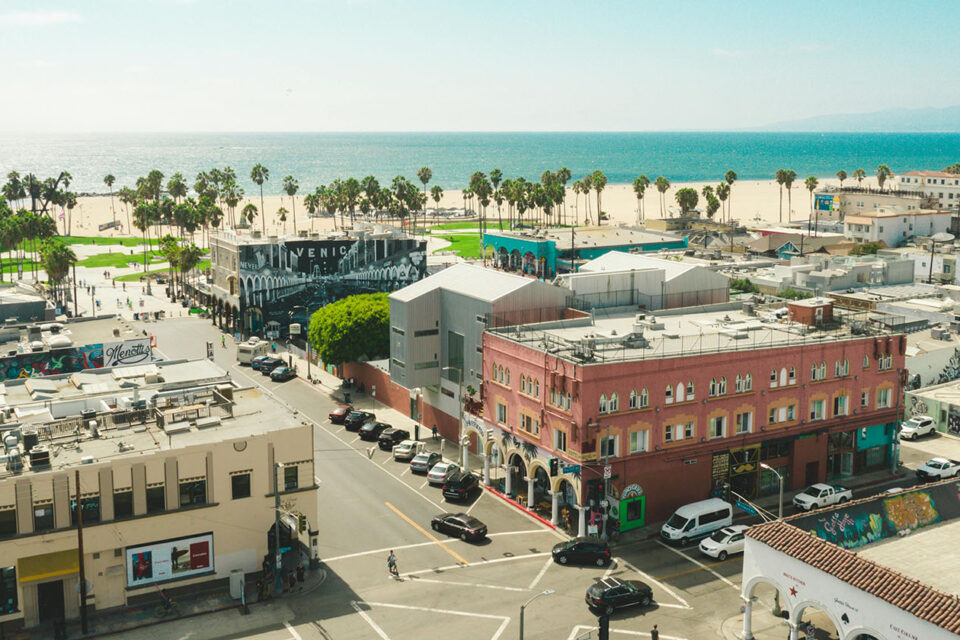
When you walk down the Venice Beach Boardwalk on a sunny afternoon, you’ll pass shop after shop selling something that looks like weed, smells like weed, and costs a fraction of what you’d pay at an actual dispensary.
The truth is that many people buy it. Later, they smoke it and feel nothing, or they feel something entirely different from what they expected. Sometimes they even fall sick.
More often than not, that’s usually when someone finds their way to Green Goddess Collective to ask whether we’re a real dispensary.
This is a fair question in a neighborhood where boardwalk shops have made cheap weed nearby and legal cannabis feel interchangeable, even though they’re nowhere close to the same thing.
If you’re among the people who have found this confusing, here’s what you need to know!
Is Green Goddess a Real Cannabis Dispensary?
Yes, Green Goddess Collective is a fully licensed cannabis dispensary located at 1716 Main St in Venice, regulated by California’s Department of Cannabis Control.
Anyone can pull up the DCC’s license search tool, enter our license number, and confirm that we’re authorized to sell recreational and medical cannabis in California.
Being licensed means we operate under an entirely different rulebook than the shops set up along the Venice Beach Boardwalk.
Every product that reaches our shelves is tracked through Metrc, California’s statewide cannabis traceability system, from the moment it’s cultivated all the way to the point it enters our register.
As a result, that chain of custody means we know exactly where every gram of flower, every vape cartridge, and every edible came from, and so does the state.
It also means that we do independent lab testing on every single batch before it’s legally allowed to be sold, as required by the state’s cannabis regulations.
Note that if a batch fails testing for any reason, it never touches our shelf, and it certainly never reaches your hands.
We’re also a brick-and-mortar permitted storefront with posted hours, a real address, an actual business license on display, and a team that can answer detailed questions about what you’re buying and why it might work for you.
Remember that none of that exists at a random shop on the boardwalk, and that distinction says a lot more than the price difference suggests.
What’s the Difference Between THC and THCA?
Nearly every mix-up we hear about traces back to one thing: most people don’t realize that THC and THCA are two different compounds.
Even though these two sound very similar, they refer to completely different cannabis compounds.
THC is a short form of delta-9-tetrahydrocannabinol. This is the compound responsible for the cannabis high. It’s psychoactive by itself without any additional steps needed.
When people talk about wanting a strong or mellow high, potency for sleep, or effects for pain relief, they’re automatically talking about THC content.
On the other hand, THCA is tetrahydrocannabinolic acid. This is the raw, non-intoxicating compound naturally present in freshly harvested cannabis.
When left untouched in a jar at room temperature, THCA won’t get you high at all, no matter how much is in there.
It only converts into THC through a process called decarboxylation, which happens when the compound is exposed to heat through smoking, vaping, dabbing, or baking it.
Heat triggers chemical transformation, stripping away a carboxyl group and turning non-intoxicating THCA into fully active THC.
This is exactly where a lot of boardwalk products get murky. Raw cannabis flower can legally test as low THC on paper while carrying a high THCA percentage, because THCA has not been converted yet in that raw, unheated state.
Some unlicensed sellers tend to market flower as low-THC or hemp-adjacent because of delta-9 content, while ignoring the fact that the THCA percentage tells you what happens the second that product is lit up and smoked.
Technically, high-THCA flower gets you just as high as high-THC flower once it’s exposed to heat. However, this will only happen if the product label is accurate.
Note that the majority of unlicensed products are not tested at all, which means the THC or THCA percentage printed on the package is a guess, a marketing number, or a flat-out lie.
That’s why so many people describe wildly inconsistent experiences from boardwalk purchases.
You’ll realize that one jar barely does anything, the next one hits far harder than expected, and there’s no way of knowing which one you’re getting until it’s already in your system.
Licensed vs. Unlicensed: What You Need to Know
The difference between a licensed dispensary and an unlicensed seller comes down to testing, tracking, and accountability. These are the three things unlicensed operators don’t have.
Let’s dig deeper:
Lab Testing
Every product sold at a licensed cannabis dispensary passes through an independent, state-certified lab before it’s allowed on a shelf.
That testing screens for accurate cannabinoid potency, pesticide residues, heavy metals, residual solvents left behind by extraction processes, and microbial contaminants such as mold and yeast.
Unlicensed sellers have no such requirement, no lab relationship, and no incentive to pay for testing that is not legally mandated. What you’re buying is whatever they say it is.
Seed-to-Sale Tracking
Licensed cannabis in California moves through Metrc at every stage. This includes cultivation, processing, distribution, and retail sale.
That system creates a documented paper trail for every batch, which helps detect contamination issues, verify potency claims, and hold cultivators and retailers accountable.
An unlicensed product has none of that. There’s no record of where it came from, how it was grown, what it was treated with, or how it was processed.
Accurate, Compliant Labeling
State-legal cannabis products are required to display specific information such as exact THC content, standardized government warning language, a unique product identifier, and child-resistant packaging.
A jar with a handwritten label or a generic sticker slapped on a plastic bag is an immediate signal that you’re not dealing with a tested, tracked product, regardless of how confident the seller sounds.
Legality
Selling cannabis without a state license is illegal in California.
It doesn’t matter how professional a shop looks, how good the branding is, or how convincing a seller talks about hemp regulations or gray-area exemptions.
If there’s no license number posted and verifiable, the operation is illegal, and so is the transaction.
Physical Accountability
Licensed dispensaries operate from permitted, fixed storefronts with posted business licenses, consistent hours, and staff trained on the products they sell.
If something goes wrong with a product, there’s a real business and a real address behind it. Conversely, a boardwalk table can pack up and disappear in five minutes.
Why Green Goddess Is the Better Call
Once you know the difference between licensed and unlicensed cannabis vendors, the choice is clear.
At Green Goddess Collective, every product on our shelves has been lab-tested, accurately labeled, and tracked from cultivation to checkout, so what’s on the label is actually what’s in the jar.
Our team can walk you through the difference between a THCA-heavy flower and a THC-dominant one. They can help you find something suited to what you’re looking for and answer questions in detail.
We’re a two-minute walk from Venice Beach Boardwalk, and serve both recreational and medical cannabis customers. Whether you’re a Venice local or just passing through for the day, stop by our cannabis dispensary or order online for delivery.